Welcome to the Summer of YOLOBy Berna Barshay  If you don't already know, 'YOLO' is a phrase that means 'you only live once'... If you don't already know, 'YOLO' is a phrase that means 'you only live once'...
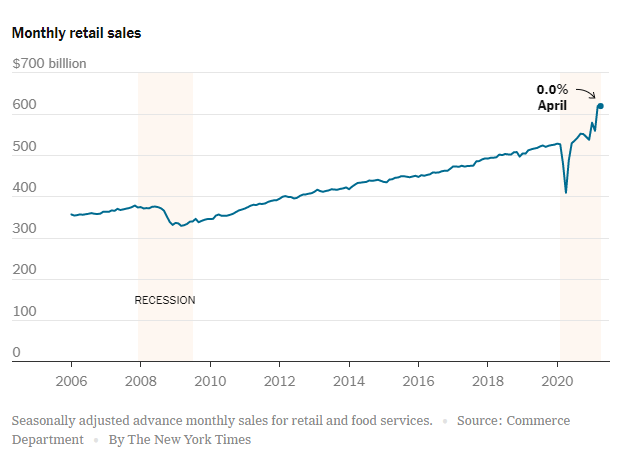
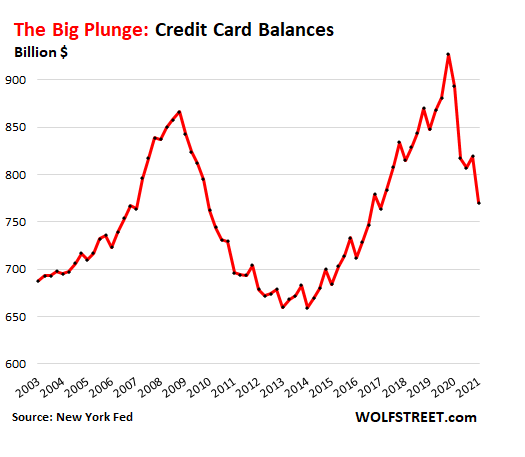
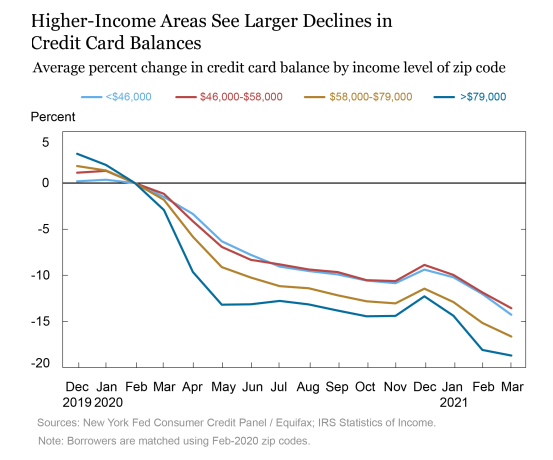
It's kind of like carpe diem (Latin for "seize the day") for the TikTok generation. For all I know, it might be a dated phrase that teens would cringe at right now. But the phrase popped up around 2012 as a ubiquitous piece of Internet slang. YOLO is forever etched in my mind as the phrase my stepson would utter when he was in high school and wanted us to buy him something... Any pushback on a requested expense was met with a charming "YOLO!" from him as he made his case. Well, it seems like we're all that YOLO-spouting teenager now. After a rough year, many grown-ups are acting more like teens when it comes to weighing spending money now versus delayed gratification. And we're seeing it in the retail sales numbers. Buoyed by stimulus checks – as well a heightened sense of relief, joie de vivre, and for many, a calendar that's no longer devoid of plans – April retail sales came in at a whopping 17.9% higher than in February 2020, before COVID-19 took a bite out of shopping. While the headlines touted that April 2021 retail sales were steady – that was versus March 2021 levels... If you take a longer view, it's easier to see just how much retail sales have jumped. A piece from First Trust Advisors puts the jump from February 2020 to April 2021 into perspective... That's the fastest gain for any 14-month period since 1978-79. A key difference? That period in 1978-79 had double-digit inflation, versus the 3.1% increase in consumer prices since February 2020. Another way to think about how high retail sales have been lately is that if COVID had never happened and sales since February 2020 had increased at a more normal 4.5% per year pace, it would have taken until November 2023 for retail sales to reach where they were in March and April this year. In other words, sales have arrived at the recent level about two and half years ahead of schedule. Retail sales are not only back to where they were pre-pandemic, but there has been a big stair-step kind of jump, which is easy to see in the chart below... Source: New York Times Of course, the million-dollar question now is how sustainable this pace of spending is... First Trust Advisors titled the piece that I quoted above: "Unsustainable." And plenty of economists and market commentators will tell you that the economy is overheating and there has been too much stimulus (cue the inflation hawks). Others who are less dug-in about the risks of rising inflation and the potential over-stimulus of the economy will fret that what we're seeing is a lot of pull-forward of future growth. As noted above, we're about 30 months ahead of schedule for retail sales, versus a theoretical world where COVID-19 never happened and historical spending growth rates were maintained. There's a credible argument to be made here that people are spending their "stimmies" along with spending money that they saved up not traveling, dining out, or refreshing wardrobes during the pandemic. But eventually, those funds will run out... And the stimulus is now of course done. On the other hand, consumers still seem to be in good shape. Banks have touted rising deposit balances on their earnings calls, and we've seen Americans paying down their credit-card debt at an incredibly fast clip. In fact, the $49 billion reduction in collective credit-card debt in the first quarter this year was the second biggest quarterly reduction ever... Source: Wolf Street The reductions in credit-card debt have been most dramatic in high-income zip codes, which are also the ones benefitting the most from the "wealth effect" – a name given to the rising propensity to spend that often accompanies changes in perceived wealth... Source: Wolf Street A rising stock market, rapidly appreciating home prices, and windfalls from cryptocurrencies all add up to make the people with exposure to these asset classes feel wealthier and take a YOLO attitude to spending a little extra cash.
| Recommended Links: | | |
 The big new crypto story you haven't heard Last year, you could have made 100 times your money in 11 months on cryptos by using a rare approach developed on a farm in Connecticut by a Wall Street legend. Today, he's unveiling his newest discovery... something he predicts will soon create a paradigm shift in U.S. business that could make you 5 to 10 times your money. Full details here. | |
|
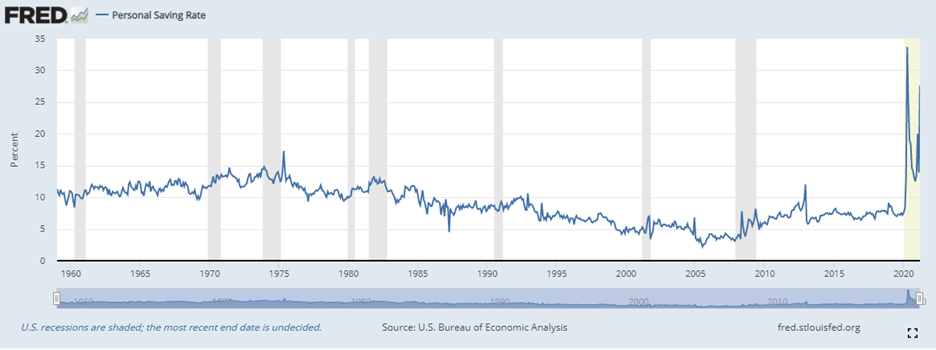
Psychology is a big part of the wealth effect, especially since fortunes can come and go in the securities markets and even in the housing market as well... Until you liquidate a gain, it's all paper profits. Wealth increases can be fleeting. But the wealth effect is nevertheless real... Back when it was publicly traded, the correlation between same-store sales at luxury department store Saks Fifth Avenue and the performance of the S&P 500 Index was nearly airtight. But the wealth effect isn't the only psychological factor at play when trying to explain this gusher of consumer spending. I would argue the YOLO effect is very much real and at play here. The last year was truly traumatic for many people. Of course, the effect was very direct for the family and friends of the nearly 600,000 people who we lost to the pandemic here in the U.S. For others, the losses were smaller – but they still mattered. The missed graduations and proms, weddings and milestone birthdays, family and college reunions are all meaningful losses that leave people wanting to make up for lost time. And as much as work from home is touted as a time saver thanks to canceled commutes... there are plenty of people out there on the edge of burn out, as work pervades all hours of the day and separation is hard to come by. And don't get me started on the exhaustion brought on by fully remote or hybrid schooling, canceled sports and activities, and the other disruptions to children's schedules. But most of us feel like we're coming out the other side. After so much has been taken away, it's natural to have that YOLO drive, which Wikipedia defines as "a call to live life to its fullest extent, even embracing behavior which carries inherent risk." Josh Brown on his Reformed Broker blog offered one of the better descriptions I have read of the psychology at work here, in an entry aptly named "Post Traumatic Shopping"... That adrenaline rush from a near-miss. Makes you feel so alive. You just survived a pandemic. Kept your job too. And your portfolio survived. More adrenaline, your brokerage account is bigger than ever. Retirement accounts too. Mix in some dopamine as well. Let's go shopping. Revenge shopping. I'm bout to be stuntin' on fools all summer. Maybe it's all that existentialist literature I consumed in college, but I think there's something more than just spending stimmies at play here. The personal savings rate soared to a record 32% rate in April last year as consumer spending plummeted 13%. But the personal savings rate has remained elevated since then, even as the pandemic has faded... Source: Federal Reserve Bank of St. Louis Over the past three months, the personal savings rate still came in way above trend... 20% in January, 13.9% in February, and 27.6% in March. These numbers don't reflect the effect that vaccinations have had on spending, since vaccine availability was still constrained in the first quarter. Additionally, since March, local COVID-19 mitigation restrictions have dropped in jurisdictions around the country – which should contribute to people feeling free to spend. It makes sense that savings surged – first because you couldn't find a place to spend money, and later because the shock of the pandemic probably spurred a lot of people to rethink – and bulk up – their emergency funds. But the farther the disruption gets in the rearview mirror, the more likely Americans are to revert to their historical savings habits... which have been decidedly measured in the single digits for decades. So while the tailwind of stimmies is sure to go away, we could see a decent offset to that as savings returns to historical levels. This will be driven by a reversion to the mean – always a powerful force – with a big assist from a strong dose of post-pandemic YOLO. Finally, one last reminder about tonight's special event with my colleague Marc Chaikin... Tonight, at 8 p.m. Eastern time, Marc is hosting "Prediction 2021." During the event, he'll reveal his favorite small-cap stock and a popular stock to avoid... and he'll discuss how everyday investors can use his Power Gauge system to find big opportunities in the markets. Marc's data is used by Wall Street's top investors, and his clients included legendary investors George Soros, Paul Tudor Jones, and Steve Cohen. But tonight, he's handing his newest and biggest investment idea to everyday investors... for what he calls a once-in-a-generation opportunity to make big gains from a major change that's sweeping the country. The event is free to attend, but make sure to reserve a spot if you haven't already. You can do so right here. In the mailbag, a lovely compliment, thoughts on the worker shortage, and a clarifying question... Have you found yourself spending more freely as the weight of the pandemic has lifted? Do you think your attitudes about spending and saving may have been permanently affected by the experiences of the last year? Share your thoughts in an e-mail to feedback@empirefinancialresearch.com. "Berna, I just wanted to compliment you on the advice you gave to Roger C. about how to get started in investing. I thought it was very thoughtful and very helpful advice. "I have been investing for well over 25 years and wish I had always followed that advice. I make mistakes when I don't. I particularly like the advice about studying an industry that you are familiar with, possibly via your work experience. I am in the semiconductor industry so focus a lot of my investments in semi companies that I am familiar with. It makes it more interesting, and it is easy for me to keep up on the developments since I understand the terminology, etc. "I also really liked the advice about investing in companies that you regularly engage with as a customer. I wish I would have always followed this advice. Sometimes we know a lot more than we think just based upon following the companies we use to support our daily lives. For example, most of us have been customers of Walmart (WMT), Costco (COST), McDonalds (MCD), Starbucks (SBUX), Nike (NKE), Apple (AAPL), Google (GOOGL), Visa (V), Mastercard (MA), Amex (AXP), Amazon (AMZN), Netflix (NFLX), etc. Just think if we had invested in these companies instead of looking for great stock tips – they all provided tremendous returns and it is always a lot more interesting to invest in something you know. "Thanks again for the thoughtful advice! It is a great reminder for me and other experienced investors as well." – Dave S. "Hey, Enrique and Berna! I've drawn unemployment before when I've been laid off, and if you're on it long enough, they'll ask to see your job search records. Though I imagine they're swamped and not checking as often right now. "At least in engineering and manufacturing, companies (for the last 25+ years) are running leaner than they used to. This was the case before the pandemic, and I expect it will be will after. Contract employment is far more common today than 20 years ago. "Thanks for all that y'all do!" – K. "I read the email about LB, but I don't see the action step" – Chap B. Berna comment: Chap, I had first recommended L Brands (LB) last May, said to sell half in July when they were up 60% in about two months, said to continue holding back in February after the company reported a strong fourth quarter, and then in my update on May 14, the implication was to continue holding. Earlier this month, my exact words were: "I'm exercising some patience and waiting for the market to fully value Victoria's Secret... I'm not selling here, either." I said I was holding on, with the implication being I think shares will go higher. Apologies for any slightly cryptic wording. Regards, Berna Barshay
May 25, 2021 If someone forwarded you this e-mail and you would like to be added to my e-mail list to receive e-mails like this every weekday, simply sign up here. |
| 




Post a Comment
Post a Comment