When Robots Start Sewing, Driving, and Earning… What Happens Next? VIEW IN BROWSER 
In the 1962 pilot episode of “The Jetsons,” Jane Jetson, a space-age housewife, wants a robot maid. The family can’t afford one, and so they end up at a U-Rent A Maid, where the salesman unloads his least desirable model on the Jetsons: Rosey the Robot. 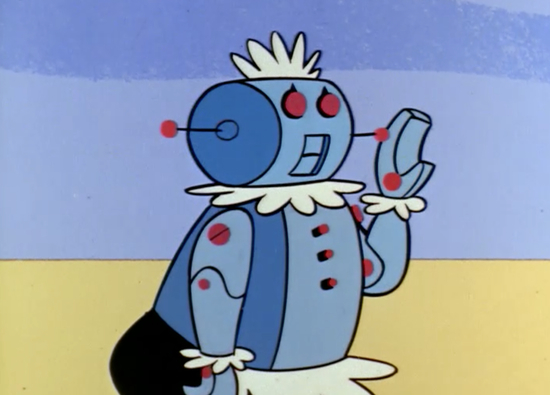
Rosey was a surprise hit, quickly becoming a mainstay of the show. The cheerful helper was a departure from the killer robots of the 1950s. Instead of world domination, Rosey was focused on cooking and cleaning for her new family. Yet, given the right hardware and software, the robots of the future will be capable of far more than household chores. Thanks to AI, robots are now stepping off the screen and into the real world – and taking over physical tasks once reserved for humans. This shift will reshape entire industries… and reward those who get in position early. So, today, let’s take a look at how Rosey the Robot is quickly coming to life. Then, I’ll share how you can access several recommendations set to capitalize on the growing world of robotics. Let’s dive in… The Fabric of the Robotics Revolution Consider sewing machines, a device that 75 million people worldwide use for their livelihoods. That’s roughly 1% of the human population. 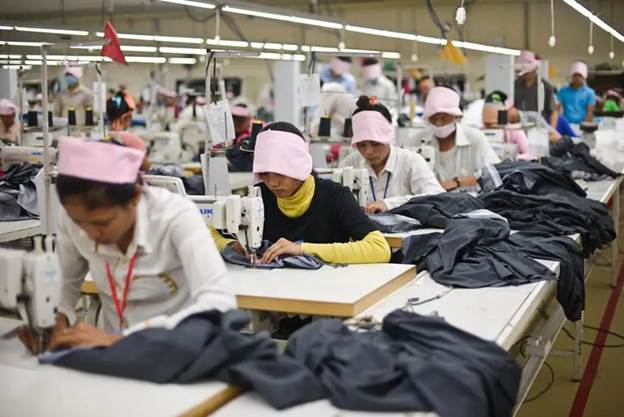
For decades, sewing has been considered too difficult for ordinary robotic arms to manage. Fabric stretches and folds in unpredictable ways – try folding a T-shirt with your eyes closed! – and researchers in the 1980s and 1990s essentially gave up after realizing that assembly line-style robots with delicate “nippers” could not consistently make good stitches. But AI is now changing that. In March, a team of Chinese researchers used transfer learning (a form of AI) to train robots to “swing” fabrics to flatten them. It’s the way you might spread out a bedsheet. Then, in April, a separate Chinese team used a convolutional neural network (another form of AI) to help robots visually recognize the quality of fabric seams, an essential step for robotic sewing. These efforts have come so quickly that China has launched a national R&D initiative to create a factory-ready robotic sewing machine by 2026. Meanwhile, AI researchers are making shockingly rapid advancements in other areas. Last year, a group of researchers at the University of Tokyo even demonstrated a human robot that could drive a car around a corner. It took two minutes… but that’s far better than anything before. And more improvements are coming as, thanks to AI, robots’ “brains” catch up with their “brawn.” Advancements in chipmaking have finally made it possible to train and test humanoid robots at scale. Then what? Imagine buying a modern-day “Rosey,” a bolt of fabric, and a $100 sewing machine. You could have a custom suit ready the next day. The same robot might then drive you to work, use your vehicle to run chores… or even earn money as an Uber driver. From there, it’s easy to slip into speculation. What happens to clothing companies? Cleaning firms? Auto repair shops? When robots can perform all the light manufacturing and services that humans can, it becomes blindingly obvious that the world of the future will look little like the world today. It doesn’t take much imagination to realize that investors must act on this trend now. And here is the best way to do it… | Recommended Link | | | | Elon Musk is set to completely take over the AI industry with Optimus… A breakthrough AI-powered robot that Elon Musk himself believes “will be the biggest product ever of any kind”. One well-connected Silicon Valley insider has uncovered a way for anybody to claim a stake in Optimus with as little as $100. All you’ll need is a regular brokerage account. Get all the information here. |  | | How to Join the Next AI Breakout Two years ago, I teamed up with my fellow InvestorPlace Senior Analysts – Louis Navellier and Luke Lango – to launch a special research project featuring only the best-of-the-best AI stocks. Our members are several stocks that have already taken off for big gains, including… - 82% gains on Evolv Technologies Holdings Inc. (EVLV)…
- 6% gains on Nvidia Corp. (NVDA)…
- 3% gains on Oracle Corp. (ORCL)…
- 2% gains on Palantir Technologies Inc. (PLTR)…
- And 74.8% gains on Vertiv Holdings Co. (VRT).
As we’ve recently noted at that research project, so many big advancements in robotics are now happening because AI processors are finally fast enough to re-create robots in a virtual space. That allows researchers and AI models to test millions of possibilities digitally before a single action is taken. In other words, these robots can try sewing millions of undershirts virtually before a single action is taken in real life. Those advancements are now reaching a tipping point. And so, I have joined Louis and Luke once more to create a new Day Zero Portfolio, focused entirely on the best investments in AI-powered robotics to keep you ahead of the curve. It includes seven new AI recommendations set to capitalize on the growing world of robotics and Physical AI. These are a carefully selected group of companies that give you targeted exposure to the next wave of AI exponential progress. And we just launched this new portfolio this week. Click here to learn more about those companies – including one free pick – at our Day Zero Portfolio broadcast. Our publisher will be taking this special free broadcast down at the end of this week… so I hope you’ll check it out now. Regards, | 




Post a Comment
Post a Comment