Karim Rahemtulla, Head Fundamental Tactician, Monument Traders Alliance Editor's Note: Yesterday was electric during our Fed Shockwave Summit. Thousands were in attendance, and they all learned our unique way to profit off down markets. Imagine making gains as high as 157% overnight when the market drops 1%. That's what the "Dark Ticker" strategy does. Click here to discover how it works today. - Ryan Fitzwater, Publisher
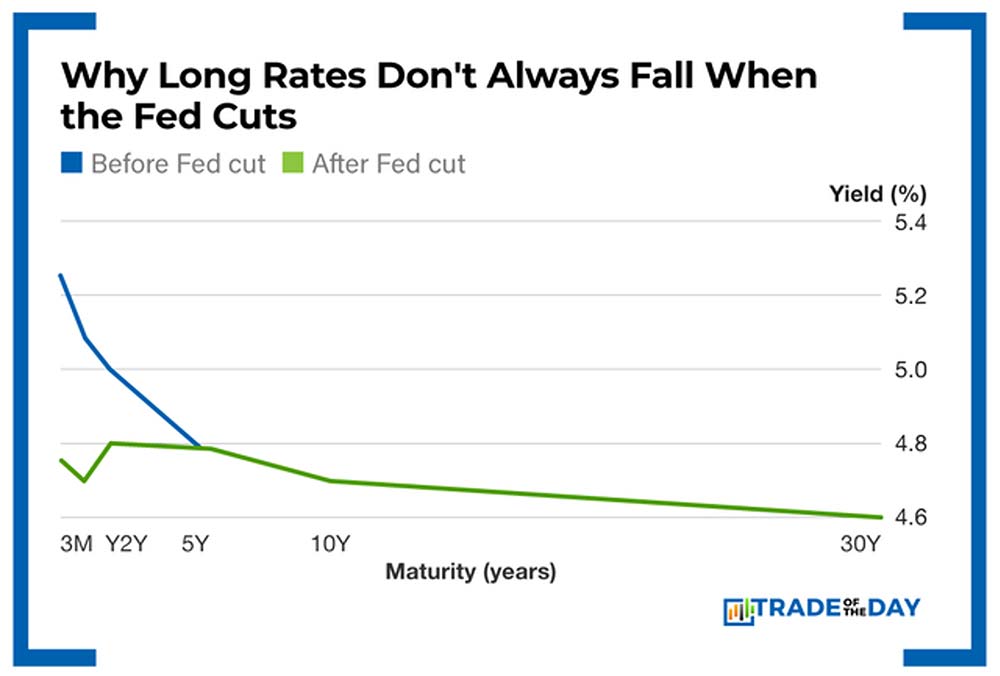
Dear Reader, After the FOMC's recent 25 basis point cut in interest rates, many people thought all interest rates would fall. Imagine their surprise when the long-term rates actually moved higher. What gives? Well, the truth is… the Fed only directly controls the short end of the curve (overnight rates, fed funds, etc.). While long-term interest rates (like the 10-year or 30-year Treasury) are set by the market based on future expectations. Here's why long-term rates don't always fall when the Fed cuts: Inflation Expectations If markets think Fed cuts will stimulate growth or stoke inflation, investors may demand higher yields on long-term bonds to compensate for the erosion of purchasing power. So, if the Fed cuts into an already hot economy, long rates can even rise. Term Premium Long rates embed a risk premium for holding long bonds (uncertainty about inflation, fiscal deficits, supply of Treasuries). If deficits are large or Treasury supply is heavy, long rates may stay elevated regardless of Fed cuts. Growth Outlook If Fed cuts are seen as too late or a sign of economic trouble, long yields may drop (flight to safety). But if cuts are interpreted as insurance cuts (to keep the economy humming), long rates may not fall—or may rise—because growth is expected to hold up. | 








Post a Comment
Post a Comment