Karim Rahemtulla, Head Fundamental Tactician, Monument Traders Alliance Editor's Note: When JC Parets makes an emergency prediction, I pay attention. His track record of calling every major market turn over the past 15 years - 2008, 2018, 2020 - before they happened speaks for itself. This isn't another market guru making wild claims. This is the analyst who warned us to ignore the crash narrative in May when everyone else was selling. Those who listened could have seen 14 winning opportunities since then. Now he's detected another government-mandated "Pivot Point" happening October 9th, and he believes this one could be even bigger. When someone with JC's proven track record calls for 2,000%+ potential returns, our readers deserve to hear it directly. That's why we're organizing this emergency briefing. Join us on October 8 at 2 p.m. ET — RSVP HERE - Ryan Fitzwater, Publisher
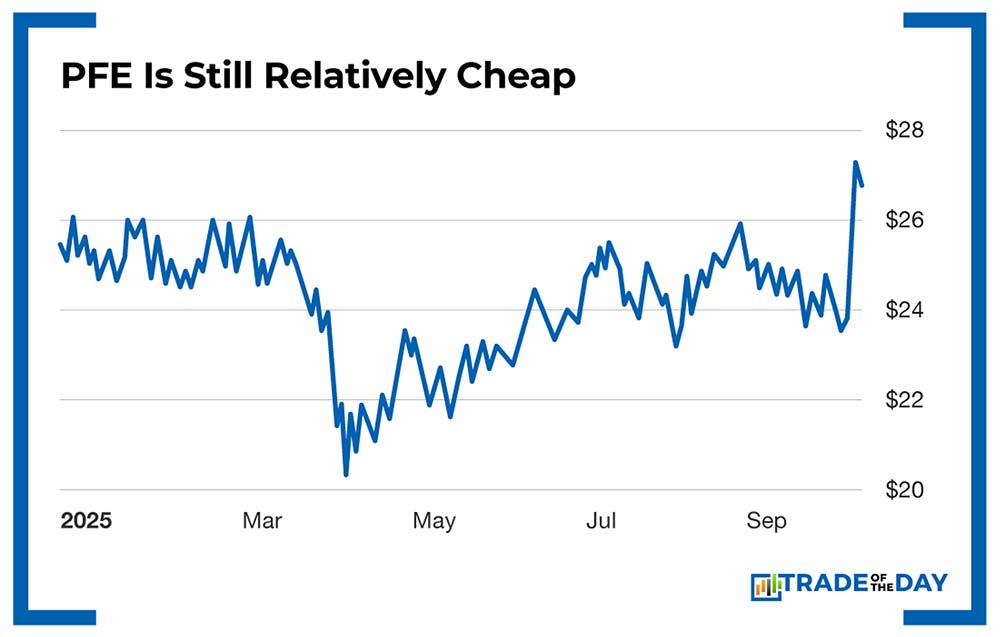
Dear Reader, I've been pounding the table on two sectors all year: oil and gas, and pharmaceuticals. Both have been the most undervalued plays in the market. This week, that thesis just got a massive catalyst. The White House announced a breakthrough deal with Pfizer covering everything from tariffs to drug prices to U.S. manufacturing facilities. Pfizer, Eli Lilly, and Merck all ripped higher on the news. We grabbed quick profits on an Eli Lilly call option in the War Room, and our Pfizer position is sitting pretty in the portfolio. But here's what most investors are missing: this isn't just a news-driven pop. This is mean reversion math finally catching up to reality. The Numbers Don't Lie Pfizer's historical P/E ratio averages between 17-19x earnings. Right now? The stock is trading under 10x earnings. Let me spell this out: You're getting Pfizer at roughly half its normal valuation multiple. That's not a small discount – that's a mathematical anomaly begging to be corrected. Mean reversion is simple: when stocks get pushed to extremes, they eventually drift back toward their historical averages. It happens because extreme movements usually aren't sustainable. Investor sentiment, regulatory fears, or macroeconomic pressures that drive prices to ridiculous levels eventually normalize. | 









Post a Comment
Post a Comment