Postcards from the Edge of the World (Vol. 4)It's the oldest tax structure in history... and it's endured because people don't take the time to add up the cost. I bring you the finest example of state-based extraction in the world.
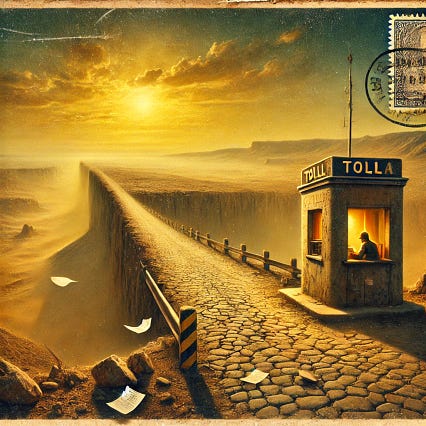
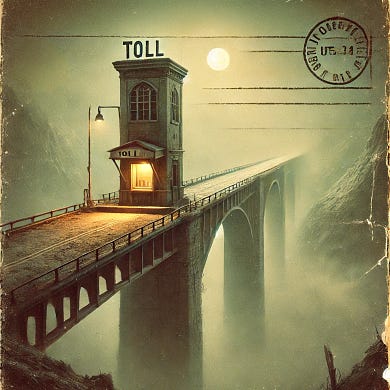
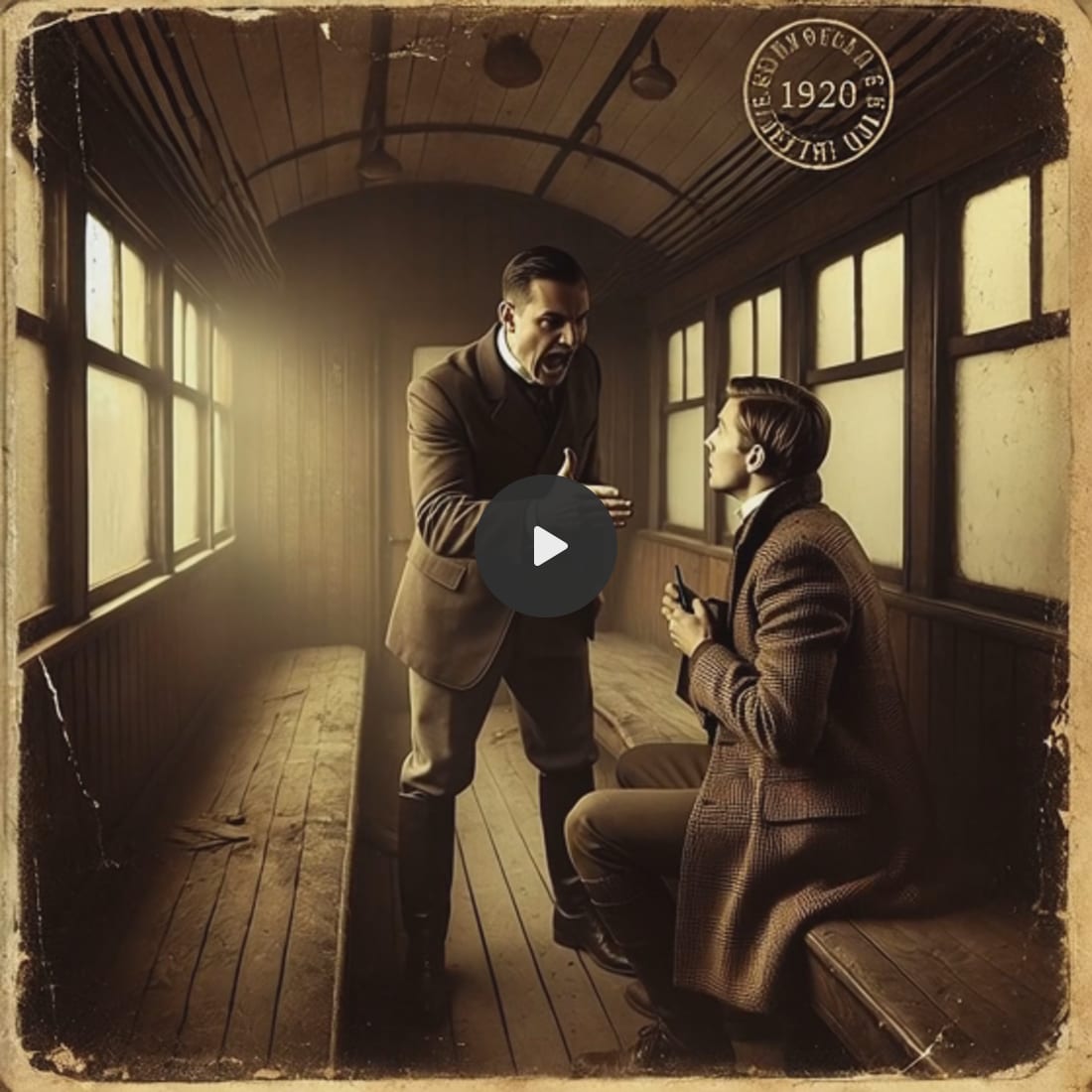 “Trade is the lifeblood of civilization.” Dear Fellow Traveler, The Year 2026 will soon announce itself quietly. Yes, it’ll come with fireworks and resolutions… But in the silence will be a notice. You’ll see a fare adjustment or a new toll increase. There’ll be a new fee that jumps after midnight on Jan. 1. You won’t argue with it… in fact, you can’t. You never meaningfully chose it, let alone approved it. But it’s there, each time you cross the bridge or pay to move yourself or something else across a distance. You may hear the charge is higher… You might not feel it until then. That said, the system doesn’t require your attention. It just requires your passage. That’s our point. Today, we’ll discuss one of the oldest forms of extraction in human history. It’s not income or property taxes. It’s just the tax on… Passage. That fee you pay for the freedom you thought you had to move around the world. As we start 2026, you must understand who pays the fee for your mobility… and decide whether you want to own a piece of the toll booths hiding in plain sight. Welcome to Volume 4 of Postcards from the Edge of the World….
The Ways They TakeThe oldest taxes in history are not on income. They were on what doesn’t move: Land… And then on what does… Passage. Passage fees are the most durable form of extraction because they tax necessity… Not human behavior. It took time and organization for governments to figure out how to tax work, sales, and savings over the course of millennia. There was initially a lack of coinage to collect taxes and then a lack of transaction transparency after coinage’s creation… There were challenges around valuation… and questions about how to skim value from a barter-based or distant trade system. Passage was simple to tax. If someone wanted to enter a city, cross a bridge, dock a ship, or move goods through a passage... they paid up front. The Romans called them portoria... a term derived from the Latin portus, meaning port or gate. Portoria were customs duties charged at roads, bridges, harbors, and city gates. Every point of passage became a simple point of extraction. Medieval Europe perfected the model. Lords built castles not just for defense, but for collection. They positioned castles and gates at river crossings, mountain passes, and trade routes. Every merchant who wanted to move goods from one market to another had to pass through someone’s territory. Every army that wanted to move into a territory had to pay the fee. Every passage had a price. People look at the City of Venice with awe. They should. It once became the wealthiest city in Europe… and doesn’t really have much of a claim to making anything significant. Instead, it controlled the passage of ships. Merchants would arrive from the East and pay to dock. And others would pay fees to move goods to the West. They didn’t own the silk or spice routes in Venice. They didn’t own farms or manufacturing plants. They just had a harbor with a big gate to the European markets. The person with the gate takes a fee from anyone who must pass…
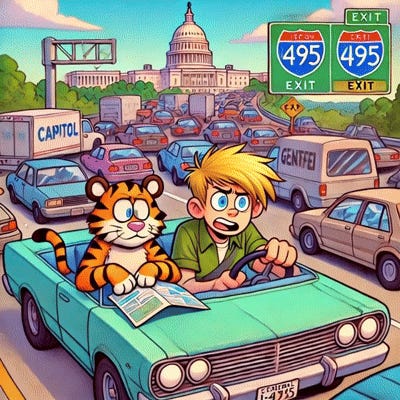
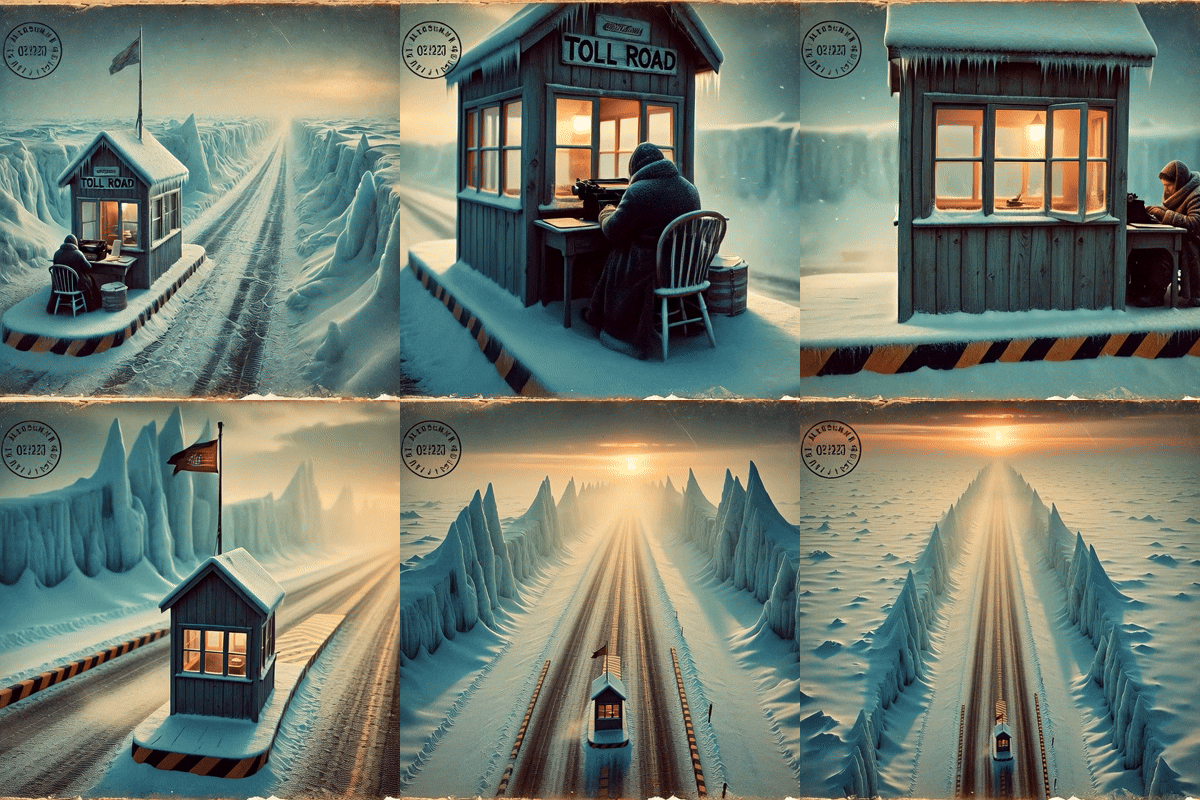
This isn’t something from ancient times. It’s the basics of international logistics… It’s a structural form of power, evident in the current geopolitical tensions between China and the United States. The terms for these passage fees have changed with time. But the mechanism… It’s always the same. Why This Moment MattersIn the year 2026, nothing’s different about the concept of passage fees. What matters is that they’re now emerging as a preferred funding mechanism for cities and states around the United States. There’s kind of a laziness to it as governments search for revenue. But they raise these fees because they can. When systems are strained, governments don’t reach for visible taxes first. Politicians hate justification, debates, voter feedback, and political risk. So, they reach for the low-hanging fruit: Taxing movement. In America, the old ways of funding highways are fading. Gasoline taxes in the U.S. are very unpopular. But they’re increasingly inefficient in the era of electric vehicles, automotive efficiency, and declining travel due to remote work. The math has stalled for the politicians trying to fund a new pet project or a bridge renamed after their family... Now… they turn to the toll booth. It was bridges first… then they started to tax the highways. Now… they’re going further. Hiking up fees (variable fees, too) on express lanes… The irony? The express lanes charge extra fees to avoid being stuck behind other people who are also paying to cross the same bridge or highway... It’s like Lightning Lane at Disney World… but more stressful. The truth of our system is this… Taxes require justification. Infrastructure never campaigns. It just collects. Beneath the NoiseAcross the country, the price of passage is rising again. They can’t blame inflation since modern toll systems already account for inflation by design. These actions are largely a cash grab to fund existing claims or to pay for another political fever dream. The California Bay Area bridge tolls are scheduled to rise from $8.00 to $8.50 on Jan. 1. That hike the first of five consecutive annual increases through 2030. By then, the same crossing costs $10.50. By 2030, 2x five days a week on a single bridge can cost $2,200 annually in tolls alone. That’s before gas, parking, and wear on your vehicle. In New York City, the MTA base fare is scheduled to rise from $2.90 to $3.00 on January 4. It’s the first time in history that it’s crossed that $3.00 threshold. But here’s the funny part. The MTA is also making its weekly fare cap permanent. Pay for 12 trips and rides 13 and beyond are free... That’s a $35 weekly cap… up from the previous cap of $33. They raised prices, called it a “cap,” and framed it as a benefit. Hilarious… Then, there’s Pennsylvania and New Jersey. E-ZPass users will pay $2.00, while Toll-By-Plate customers will now pay $5.00 on eight bridges, including the hyper-busy Delaware Bridge. It’s the same bridge… and the same crossing. But one pays more than the other… because one person paid another fee and one didn’t… That’s just a few examples. You pay tolls because life requires movement. You must work, take your kids to school, and - coincidentally - participate in the economy they’re imposing a toll on to engage in… The system doesn’t need to raise income taxes or a budget. It only needs to own the chokepoints and adjust the price. That’s the way it’s done. Someone builds a path, makes it essential, and then charges forever. Amazon perfected this model in code. Governments perfected it in concrete. And they both know it works because… It’s as old as Rome. How Power Really WorksLet’s return to the point I made about James C. Scott’s Seeing Like a State. Scott argues that the real power of the state isn’t found in its laws or its armies. It’s found in its ability to simplify. The state takes a chaotic system... forests, cities, populations... and reduces it to categories that can be measured, managed, and extracted from. It turns complex systems into simple outcomes. Think about what a toll does. It reduces all the randomness of human movement... the reasons you’re traveling, your financial situation, and a trip’s urgency into a one binary event. That event: You crossed the line. Now, you pay the price. There’s no debate about whether the charge is fair or the revenue is well-spent (let’s not go down that rabbit hole). You’ve just reached a chokepoint… This is why tolls are the purest form of extraction. They don’t require your consent, understanding, or attention... Someone built a path, made it essential, and now they charge you to use it. Extraction works best when it doesn’t feel like theft. The Everyday HustleMost people don’t think of themselves as being “taxed” when they swipe a transit card or drive through a toll gantry. They feel it instead. And they really feel it when commutes cost more, even though wages didn’t rise. When a city becomes more expensive, it’s not just because of rent, but because of movement. A few dollars here or there. Nothing dramatic enough to protest or sudden enough to even notice… But that’s how it’s designed. Because if all these increases happened at once... if someone sent you a single bill for all the passage fees you’ll pay this year... you’d be throwing eggs... But spread it across a thousand small transactions, and it’s now invisible. It just becomes “the cost of living.” That’s why so many people feel exhausted and squeezed. They’re working within a system where the cost of participation keeps rising faster than they can keep up… That’s the treadmill that they don’t control… The Real EconomyYou can route around some tolls and reduce others. You can’t eliminate the cost of passage. People will still commute…. Goods will still move. Energy must flow through corridors. Even if you personally decide to work from home forever, the food you eat traveled across toll roads. Your electricity travels through regulated grids. Your packages travel through ports, airports, and highways. Passage is entrenched in the price of everything. Which means tolls will continue to be collected long after trends change. Long after the economy rises or falls… and long after the next crisis. The merchant risks his capital… the worker will risk their time. But the toll collector? He just waits…That’s how logistics work. So the question isn’t whether passage extraction will continue. The question is what you’ll do about it. The Back PageFrom the Edge of the World, the pattern is impossible to miss. The people who got wealthy across centuries didn’t guess which product would be the most popular next year. They didn’t time the markets or predict the trends. They owned the road. The Medicis didn’t just lend money… they controlled the exchange points where currencies were converted. The Dutch East India Company didn’t just trade spices… they controlled the ports where ships had to dock. The railroad barons moved freight… and ALSO owned the only tracks connecting markets. Lasting wealth doesn’t just come from predicting which technology will win. It comes from owning the infrastructure everyone else has to use, regardless of what wins. This is about roads, bridges, ports, pipelines, grids… and now e-Commerce platforms. When you own a toll road, you don’t care if a car is electric or gas-powered. You don’t care if a driver is going to work or to the beach. You don’t care if the economy is booming or struggling. You only care that someone crossed YOUR line. That road is the only way to get where they’re going.
The Sovereign Move... Own the BoothMost people already pay tolls every day. The quiet decision is whether to pay them only... or own a slice of the booth. That’s why a portion of long-term capital has always belonged in infrastructure assets that collect tolls, fees, and regulated returns. This isn’t a trade or prediction. This isn’t a bet on an outcome. It’s the ownership of passage itself. Owning infrastructure isn’t an endorsement of the system. It’s an acknowledgment of how it works. So, this week’s sovereign move is straightforward. Park a portion of long-term savings in a vehicle that owns the actual infrastructure the world runs on. This Week’s Pick…As I’ve noted, Postcards is a new publication that draws on my deep academic background and questions about how systems work. I have explained that my purpose is “to uncover how markets truly work and translate that knowledge so people can protect themselves, seize opportunity, and think independently in a system that rewards confusion.” That’s what this letter aims to do… It is a time-consuming process… it is… and I work independently. So, I ask that you consider joining Postcards from the Edge of the World. At least twice a month, you’ll get a stock pick and insights on how to invest and take action to claim back your sovereignty. I’ve been a consistent voice for my readers for years… and I’m hyperfocused on protecting people… and showing measurable results as part of my brand. If you’re considering joining me, I invite you to read the comments from my readers at The Capital Wave report about the work that I put in on their behalf… This is a new publication… and it will be measured on a different approach… but I am deeply committed to showing you how the system works… so that you can feel empowered, knowledgeable, and prepared… This week’s pick centers on the way to invest in all those toll booths… giving you something that will rise with inflation… and align with the families who have succeeded for centuries in the world of alternative, cash-producing assets. If you’re new, I have cut my price dramatically at the end of the year… And if that’s not good enough, reply to this email, and we can work something out if your situation requires it... Once you have subscribed… you’ll be able to access the latest pick right here… And you’ll have access to our previous write-ups on the top toll collector in the energy storage space (although I opened this up for all readers last night) and the ultimately protection play in gold and silver… I appreciate your time and consideration. Stay sovereign, Garrett Baldwin Invite your friends and earn rewardsIf you enjoy Postcards From the Edge of the World, share it with your friends and earn rewards when they subscribe.
|




Post a Comment
Post a Comment