Private credit filled the post-2008 gap. Now it may be creating a new one?
A $3 trillion market just started showing cracks. This should concern every investor.
Private credit is lending that happens outside traditional banks. Instead of borrowing from banks like JPMorgan or Wells Fargo, companies borrow from investment funds, wealthy individuals, and institutional money managers. | The market has grown five times larger since the 2008 financial crisis. It now sits at roughly $3 trillion globally. | And in recent weeks, something changed. Share prices for private credit managers dropped sharply. Investors started asking uncomfortable questions. |
|
| | Why Private Credit Exploded After 2008 | After the financial crisis, regulators forced big banks to tighten their lending practices.
Banks had to hold more capital. They had to be more selective about who got loans. They had to follow stricter rules. | This created a gap. Many companies, especially smaller ones, couldn't get bank loans anymore. They didn't meet the new requirements. They were too small or too risky for traditional banks. | Private credit funds stepped in to fill that gap. | These funds offered loans to companies that banks wouldn't touch. They charged higher interest rates to compensate for higher risk. Investors accepted those risks because the returns looked attractive. |
|
| | | | | Wall Street Legend Issues Chilling New Warning: "I've Never Seen Anything As Dangerous As This" | | The man who predicted the 2008 crash and 2020 says today's soaring markets are NOT a bubble - they're something far stranger and more dangerous. He says it's about to change everything you know about money. | Full story here |
| |
| | |
| Who's Borrowing This Money | A significant amount of private credit goes to software companies. | This made sense because most software firms are startups and too small to sell corporate bonds. They don't have the track record or financial statements that banks require. | Private credit became their lifeline. Need $10 million to expand? A private credit fund would provide it at 12% interest instead of the 6% a bank might charge (if the bank would lend at all). | The borrowers got capital. The lenders got higher returns. Everyone seemed happy. |
|
| | The AI Problem | Here's where things get complicated. | Many software companies exist to build tools, apps, and platforms that businesses need. But artificial intelligence is rapidly changing that equation. | It raised an unconventional question. If AI can develop software with just a prompt, do we need as many software companies? Can't AI just replace the products these firms sell? | These questions aren't theoretical anymore, and they're affecting valuations right now.
Investors started worrying that software companies might struggle to repay loans if AI makes their products obsolete. Share prices for private credit managers dropped as this concern spread. | That drop itself isn't catastrophic. But it might be an early warning signal. |
|
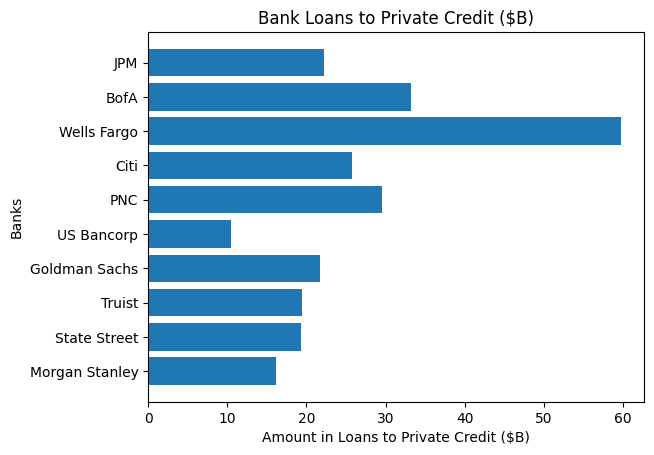
| | The Hidden Connections | Private credit doesn't exist in isolation. It's connected to the broader financial system in ways that create potential problems. | | Big banks, the ones considered too big to fail, often lend money to private credit managers. Those managers then use that borrowed money to make riskier loans to software companies and other borrowers. | Think of it like a chain: Banks lend to private credit funds. Private credit funds lend to risky companies. If those risky companies can't repay, the private credit funds take losses. If the funds take big enough losses, they can't repay the banks. | This creates contagion risk. A problem in one part of the chain can spread to others. |
|
| | Why This Feels Different | Private credit is less transparent than traditional bank lending. | When banks make loans, regulators monitor them closely. The loans appear on balance sheets. Stress tests check if banks can handle losses. | Private credit operates with less oversight. The loans are private contracts. There's no central database tracking total exposure. Regulators have limited visibility into who owes what to whom. | This opacity makes it harder to assess systemic risk. You can't solve a problem you can't see. |
|
| | The Current Situation | Right now, a private credit collapse isn't imminent. | Most of these loans are still performing. Borrowers are making payments. The funds managing these loans have capital buffers. | But the warning signs are appearing. Share price drops for private credit managers suggest investors are repricing risk. They're demanding higher returns to compensate for uncertainty. | The concern isn't what's happening today. It's whether this is the beginning of something larger. | If AI genuinely threatens software companies, and software companies hold significant private credit debt, the losses could cascade. Private credit funds would struggle. Banks exposed to those funds would face pressure. |
|
| | What It Means for Regular Investors | Most individual investors don't own private credit directly. | But they might have indirect exposure through pension funds, endowments, or diversified portfolios that include alternative investments. | The bigger concern is contagion. If private credit problems spread to banks or if they trigger broader credit market stress, traditional investments get affected. | Stock prices fall when credit markets freeze. Corporate borrowing costs rise. Economic growth slows. | The 2008 financial crisis began in one corner of the credit markets (subprime mortgages) and spread throughout the financial system. Private credit isn't subprime. | The scale is smaller. But the contagion mechanism exists. |
|
| | The Bottom Line | Private credit grew to $3 trillion by filling a real need. Companies that couldn't get bank loans found alternative lenders willing to provide capital at higher rates. | This worked fine during the good times. Software companies grew. Loans got repaid. Investors earned attractive returns. | Now conditions are changing. AI threatens to disrupt software companies that borrowed heavily. Private credit managers' share prices are falling. Investors are growing wary. | What makes this concerning is the hidden connections between private credit, big banks, and the broader financial system. Losses don't stay contained when the financial system is interconnected. | Is this the start of a crisis? Too early to tell. Could it become one if AI disruption accelerates and borrowers start defaulting? Yes. | The next few quarters will reveal whether this is a temporary repricing or the beginning of something more serious. Watch for rising default rates, falling valuations for private credit funds, and any signs of banks pulling back from lending to the sector. | Private credit solved a problem created by tighter bank regulations after 2008. The question now is whether it created a new problem by lending to companies that might not survive the AI revolution. | Watch this space for regular updates. |
|
| | | | | Important disclosures: This newsletter is provided for informational purposes only and does not constitute investment advice. All investments involve risk, including possible loss of principal. Please consult with your financial advisor before making investment decisions. |
| |
| | |
|
|
| | | | Update your email preferences or unsubscribe here © 2026 Market Memo by Sellet LLC 2870 Peachtree Rd NW #915-1904
Atlanta, Georgia 30305, United States | | Terms of Service | |
|
|
|
|
|


Post a Comment
Post a Comment